Solitaire - 2026
- 4.7
- Rating
- 1.00M
- Installs
- Free
- Price
 Analysis by App-foxy
Solitaire - 2026 is the kind of card game I open when I want a quiet few minutes rather than a demanding challenge. It focuses on the familiar Klondike style, the classic patience format that many people already know from computers, card tables, or other mobile games. What makes it appealing is not novelty for its own sake, but the ease of starting a round, understanding the objective, and putting the phone down whenever real life interrupts.
I reviewed it as a free card game from Standard Puzzle, and my overall impression is straightforward: it is a comfortable choice for traditional solitaire players who want a simple mobile version, while people looking for a large collection of unusual modes or a more social experience may find it too narrow. Its audience is broad, reflected by an Everyone age rating, but that does not mean it suits every playing style. The best reason to use it is convenience, not spectacle.
How the classic format feels on a phone
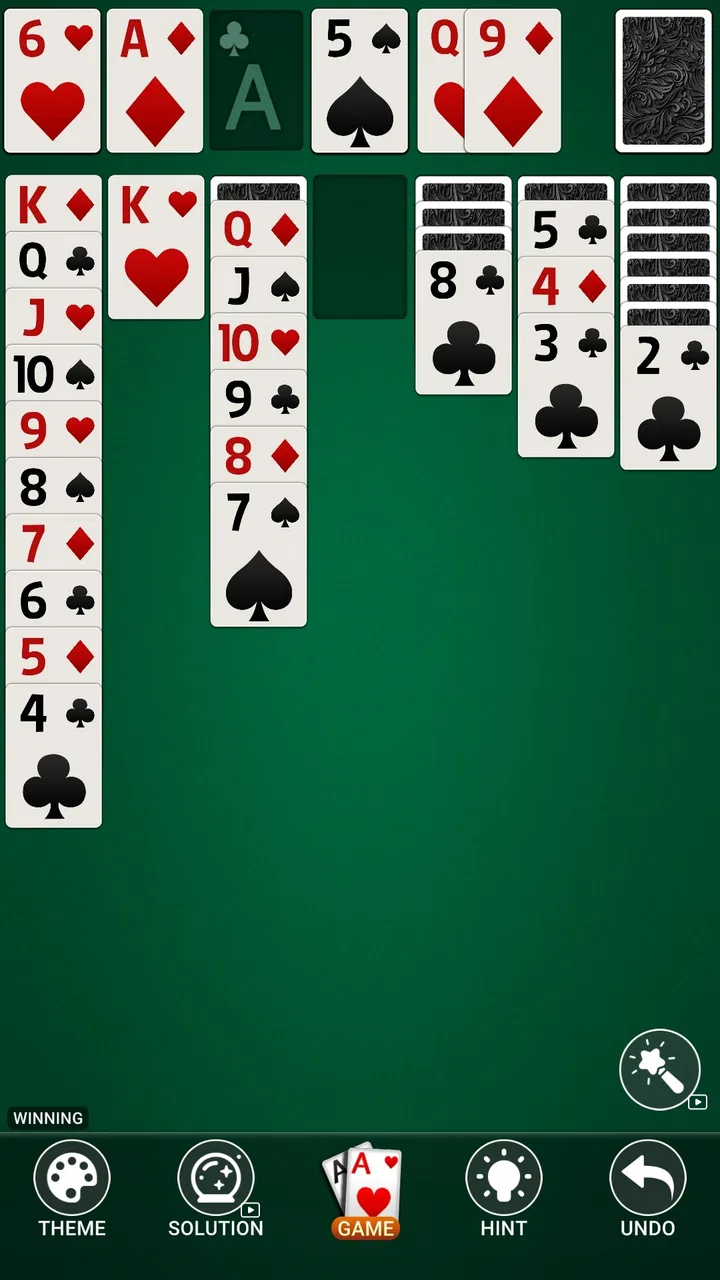
The central appeal is the familiar Klondike arrangement. You work through the tableau, build sequences by alternating colors, move cards toward the foundations, and use the stock when the visible cards do not give you a path forward. Because the rules are established, I never felt lost while playing. Someone new to solitaire can learn by experimenting, while an experienced player can concentrate on planning instead of decoding an unfamiliar system.
You May Also Like

 Blood Strike: 2.5 Anniversary
Blood Strike’s Loadouts Turn Every Drop Into a Tactical Gamble
A close look at Blood Strike’s custom loadouts: how fast access to signature weapons reshapes its battle royale rhythm, rewards preparation, and narrows the gap between fights.

 Pandora - Music & Podcasts
Pandora’s Music Is Easy to Start, but Harder to Recover
Pandora’s strength is its low-effort path from a seed to a station. Its weak spot is how much confidence it asks you to place in connection, setup, and quiet recovery.

 8 Ball Pool
 Is Built on Rivalries, Rematches, and Routine
A close look at the rivalries, rematches, shared routines, and unanswered safety questions that turn a quick pool match into a persistent mobile community.

 Samsung Music
’s Quiet Strength Is Playing What You Already Own
Its reach comes less from spectacle than from dependable access to a personal library. That simplicity is both the app’s strongest retention engine and its ceiling.

 AccuWeather: Weather Radar
AccuWeather Review: A Quick, Clear Forecast for Everyday Decisions
For everyday plans, the best forecast is the one you can understand quickly. AccuWeather makes rain timing, radar, and local conditions easy to act on, with a few trade-offs.

 Hill Climb Racing
Why Hill Climb Racing Still Turns Crashes Into One More Run
A tiny car, a bumpy hill and one more upgrade: Hill Climb Racing keeps resurfacing because its simple chaos makes every near-miss feel personal.
More From Our News Desk



That familiarity also makes the game useful in small gaps during the day. I can imagine playing a round while waiting for an appointment, during a short commute as a passenger, or at home when I want something more active than scrolling but less intense than a competitive game. A solitaire round has a natural rhythm: inspect the tableau, make a safe move, reveal a hidden card, and reassess the position.
The important distinction is that this is a traditional card game experience, not a role-playing game, puzzle campaign, or multiplayer card battler. The pleasure comes from arranging information and making decisions with incomplete options. That gives each move a small amount of weight, even when the session lasts only a few minutes.
What I pay for, and what I do not
The game is free to download and play. That is the clearest value point, especially for anyone who wants ordinary solitaire without committing money before trying it. I would not describe it as a paid product with a trial period; the practical decision is whether the free experience fits your habits and tolerance for whatever interruptions or presentation choices come with it.
I also avoid treating the free label as proof that every part of the experience is equally comfortable for every player. A free game can still involve tradeoffs in pacing, screen space, or optional presentation elements. Since the verified price is free, my recommendation is based on access rather than on a claim about premium value. If you are comparing it with a paid solitaire app, the relevant question is whether the paid alternative gives you a cleaner or more specialized experience that matters enough to justify its cost.
For a casual player, free access lowers the risk considerably. You can test the controls, card readability, and overall flow without first deciding that solitaire deserves a place in your paid app library. For a dedicated player, however, price alone should not settle the decision. A free game is good value only if its interface lets you play comfortably and its approach to the classic rules matches what you already enjoy.
Small decisions matter more than fast tapping
My favorite part of this format is the way it rewards restraint. The obvious move is not always the best move. If two cards can be placed in the tableau, I try to consider which placement exposes a hidden card, preserves a useful empty column, or keeps a lower card available for a future sequence. That habit is more valuable here than simply moving every legal card as quickly as possible.
A practical technique is to inspect the tableau before touching the stock. I look for moves that uncover face-down cards and for sequences that can be moved without burying a card I may need soon. When the stock is available, I resist cycling through it automatically. The order of cards can make a difference, so I treat each pass as a planning exercise rather than a reflex.
Another useful approach is to protect empty columns. An open column can be powerful because it gives you room to move a longer sequence, but filling it immediately with the first available king may remove flexibility. I prefer to ask whether that king creates a genuine route forward or merely makes the layout look tidier. This is the sort of small tradeoff that separates a thoughtful solitaire session from random card movement.
These tips are not special features that the game needs to advertise; they are ways to get more depth from its classic rules. They also explain why the format remains playable after the novelty wears off. The board may look simple, but the value comes from repeatedly judging which legal move is safest and which one creates the best future position.
Where it fits among other solitaire choices
Compared with a physical deck of cards, this version is more convenient and forgiving of a messy table. I do not need to shuffle, deal, or clear a surface, and a short session is easier to start. The physical alternative still wins if I want a tactile activity, a screen-free break, or a shared game with another person.
Compared with a general-purpose solitaire collection, this game is more focused. That can be a strength when I already know I want Klondike and do not want to browse through many variants. It becomes a weakness when I expect unusual layouts, a broad selection of rule sets, or a long progression system. A collection is the better choice for players who quickly tire of one format.
It also differs from competitive card games because the pressure is mostly self-imposed. There is no need to learn an opponent’s habits or react to another person’s turn. That makes it calmer, but it also means there is less social tension and less reason to return for competition. If your ideal card game includes live matches, rankings, or direct interaction, this is probably not where you will find the strongest value.
Against a computer solitaire program, the mobile version has the obvious advantage of being easy to keep nearby. A desktop alternative may feel better for players who prefer a larger layout, a mouse, or an uninterrupted session at a desk. On a phone, the experience depends heavily on whether the cards remain comfortable to inspect and move on the particular screen being used.
Who is likely to get the most from it
I would recommend it first to people who want a familiar, low-pressure distraction. It works well for someone who already understands Klondike and wants to begin playing immediately, but it can also serve a newcomer who is willing to learn through the layout. The Everyone rating makes it suitable for a broad audience, although younger players may still need a little explanation of the rules if they have never played patience before.
It is especially suitable for short, interrupted sessions. Imagine sitting in a waiting room with only enough time for a few decisions. You can start a deal, make progress, and stop without needing to coordinate with anyone else. Later, the same kind of player can return for a longer session and focus on improving judgment rather than chasing a complicated objective.
I also see value for people who use solitaire as a mental reset. The game gives the hands something to do while keeping the mind lightly engaged. It is not an educational tool in any formal sense, but it does encourage sorting, sequencing, and looking ahead. That makes it more satisfying than passive entertainment when I want a short activity that still asks me to participate.
Its popularity supports the idea that it has broad appeal: the game has an average rating of 4.7 from around fourteen thousand ratings, and it has passed one million installs. I read those figures as signs that many players find the basic experience accessible, not as a guarantee that every person will enjoy the interface or the same style of play.
Where the experience may fall short
The biggest limitation is the narrowness of the core idea. If you play solitaire frequently, the standard Klondike structure can begin to feel repetitive. The same familiarity that makes the game welcoming also limits surprise. I would not choose it as my only mobile game if I needed constant discovery, changing objectives, or a strong sense of progression.
There is also a difference between a legal move and a satisfying move. New players may sometimes move cards without understanding how that affects the rest of the tableau, then reach a position that feels blocked. That is not necessarily a flaw in the app; it is part of solitaire. Still, anyone expecting a game that constantly guides them toward a solution may find the quiet, self-directed nature frustrating.
Screen size can create another practical tradeoff. On a smaller phone, a dense tableau asks for more careful tapping and visual checking than a physical layout or desktop display. I prefer to slow down rather than make rapid moves when several cards are close together. Players with visual or motor difficulties should pay particular attention to whether the card presentation feels comfortable on their device before making it a regular game.
The game is from Standard Puzzle, and its current version is 1.958. It runs on Android starting with OS version 9, which makes it accessible to many existing devices, though anyone using an older phone should check compatibility before planning around it. Those details matter less than the actual card experience, but they are useful when deciding whether this particular installation fits an older handset.
How I would use it in an ordinary week
My preferred routine would be to use it as a deliberate break rather than as an endless background activity. I would play one or two rounds after finishing a task, focusing on making careful tableau decisions instead of rushing to complete a deal. If I lost, I would treat the result as a reminder to review where I spent an empty column or used the stock too early, not as a reason to tap through another round without thinking.
For a beginner, I would start by learning the basic movement pattern and then adopt one rule: before every major move, check what card it exposes and what space it consumes. That single habit prevents a lot of aimless play. Once the layout becomes familiar, I would begin looking for opportunities to move complete sequences and preserve flexibility instead of simply building the longest visible stack.
For an experienced player, I would use it when I want a clean mental pause without the commitment of a campaign. The challenge is not discovering hidden content but improving the quality of decisions inside a known ruleset. That makes it a good companion for routine moments, although not a replacement for a richer card collection when variety is the main goal.
My recommendation after weighing the tradeoffs
My recommendation is to try it if you want free, familiar Klondike solitaire and value immediate access over variety. The cost is easy to justify because there is no purchase price, and the game’s broad audience, strong average rating, and large install base suggest that its straightforward approach works for many people. I would be comfortable suggesting it to a friend who asked for a simple patience game rather than a feature-heavy card platform.
I would skip it, or at least compare it with another option, if your priority is a wide range of solitaire variants, a social challenge, a deep reward structure, or a desktop-sized playing area. A paid alternative may be better for someone who specifically wants a more polished, specialized environment and is willing to pay for that distinction. The free price makes this game easy to test, but it does not remove the need to decide what kind of card experience you actually want.
Released on May 23, 2023, it has had time to establish a recognizable place among mobile solitaire games. My final view is modest but positive: this is a dependable choice for the classic format, best enjoyed slowly and thoughtfully. If your ideal session is a quiet deal, a few careful moves, and an easy exit when something else needs your attention, Solitaire - 2026 delivers that without asking you to learn an elaborate system first.
FAQs for Solitaire - 2026
01What are the key features of Solitaire - 2026?
Solitaire - 2026 offers a classic card game experience with modern enhancements. It includes multiple themes, daily challenges, and an intuitive interface. The game also provides customizable settings, allowing you to adjust the difficulty level, backgrounds, and card designs. These features make it appealing for both casual players and Solitaire enthusiasts.
02Is Solitaire - 2026 free to play?
Yes, Solitaire - 2026 is free to download and play. However, the app includes in-app purchases and ads. These purchases can help enhance your gameplay experience by unlocking premium themes or removing ads. It's designed to be fully enjoyable without spending money, though premium options are available for those who wish to enhance their experience.
03Can Solitaire - 2026 be played offline?
Absolutely, Solitaire - 2026 can be played offline. This makes it an ideal game for those moments when you don't have an internet connection, such as during travel. While some features, like daily challenges, require internet access, the core game is fully accessible offline.
04What are the system requirements for Solitaire - 2026?
Solitaire - 2026 requires a device running Android 5.0 or iOS 11.0 and above. It's optimized to run smoothly on both smartphones and tablets. The app is lightweight, ensuring it doesn't take up much space on your device, making it accessible to a wide range of users.
05Does Solitaire - 2026 include any accessibility features?
Yes, Solitaire - 2026 includes several accessibility features to ensure a comfortable gaming experience for all players. These include adjustable text sizes, high-contrast themes, and optional sound controls. The developers have focused on making the game accessible to users with varying needs, enhancing inclusivity.
Pros
- Smooth and intuitive user interface.
- Daily challenges keep gameplay fresh.
- Customizable card designs and backgrounds.
- Offline mode available for play anytime.
- Minimal ads enhance the gaming experience.
Cons
- Limited game modes beyond classic Solitaire.
- No multiplayer or social features.
- Occasional lag on older devices.
- In-app purchases can be expensive.
- No progress sync across devices.

Solitaire - 2026
Gallery